It’s not really a secret anymore that social media platforms are using artificial intelligence, but what’s interesting is how differently each platform applies it. LinkedIn, in particular, has become much more advanced in how it understands content. And I noticed this very clearly during a coaching session with my client Rebecca.
She is a Spanish entrepreneur based in Belgium, working in consulting around money blocks and business mindset. Like many people coming from Instagram or TikTok, she was heavily relying on hashtags in her LinkedIn posts, because that’s what she was used to. But LinkedIn doesn’t really work that way anymore.
LinkedIn reads your text more than your hashtags
What most people don’t realize is that LinkedIn is now reading your actual text much more than your hashtags. The system is not just categorizing content based on tags, but interpreting meaning directly from what you write. So if you naturally talk about leadership, for example, LinkedIn already understands that context. And if someone is searching or engaging with leadership-related content, your post can appear without you ever needing to add a hashtag. In other words, hashtags are not completely useless, but they are no longer the main driver of visibility. The language inside your content is doing most of the work.
Keywords inside your writing matter more than formatting tricks
This is a big shift, because it means your writing itself becomes the signal. The keywords you use inside your sentences matter much more than how you label them at the end. If you consistently talk about certain topics in a natural way, the platform starts connecting your profile and your content to those themes. That’s how discoverability actually happens now. Not through tricks, but through clarity of language.
Why AI-generated copy doesn’t always perform well
At the same time, I’ve also started noticing another pattern, especially with the rise of AI tools. A lot of people are now generating content through ChatGPT or similar tools and posting it directly without really shaping it into their own voice. And while this can save time, it often leads to very generic content that doesn’t feel like a real person is behind it. LinkedIn is not only measuring reach in a mechanical way anymore. It also looks at how people respond to your content, how relevant your profile is to the topics you’re talking about, and whether your content feels authentic or interchangeable.
The importance of relevance and real engagement
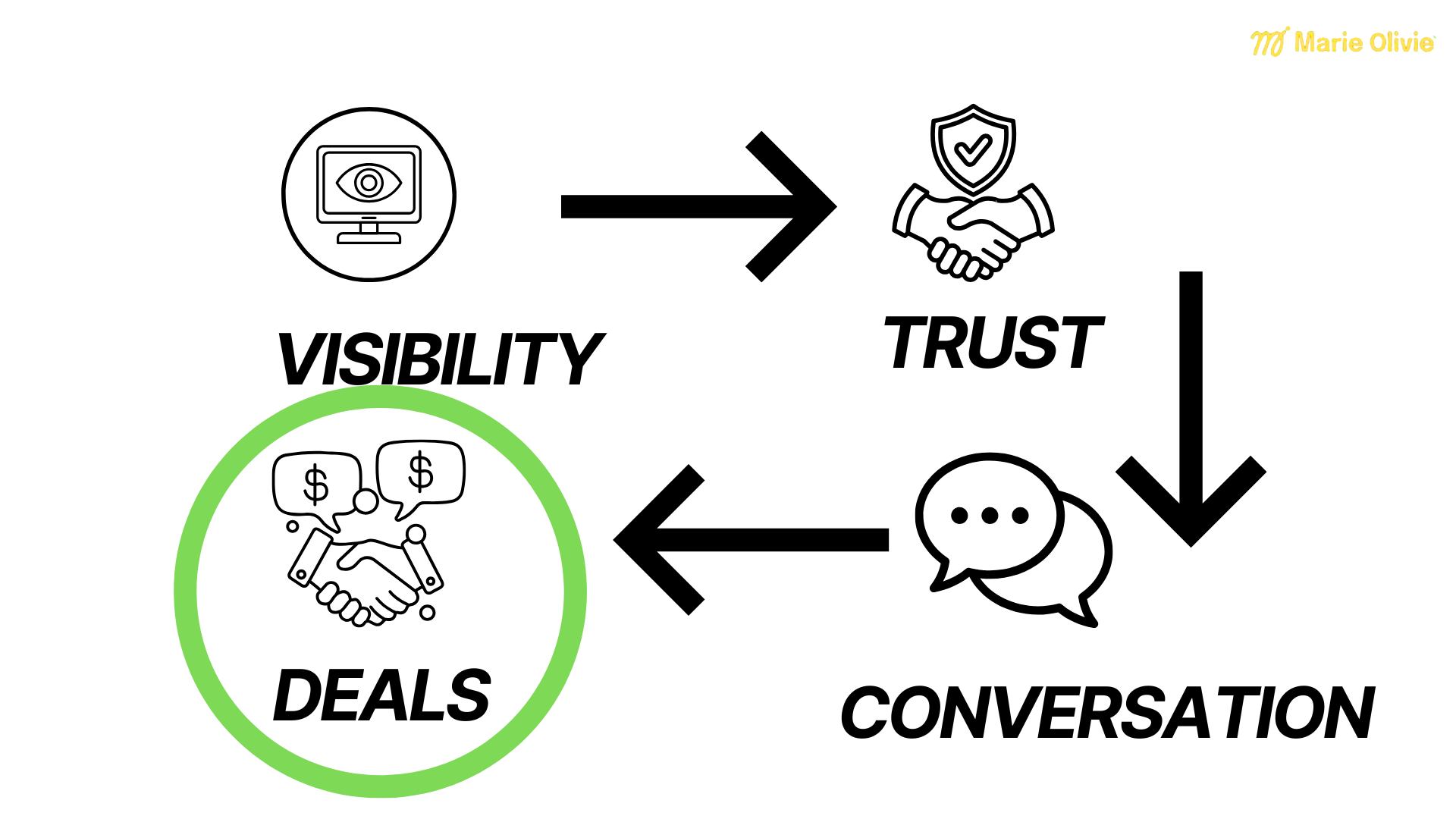
And this is where something like the so-called “social selling index” becomes relevant, even if people misunderstand it. It’s not about perfection or hacking the system. It’s more about consistency, relevance, and whether your presence actually feels connected to what you do. If your content feels like it could belong to anyone, people simply scroll past it. And when that happens repeatedly, the system naturally stops pushing it further.

A real example from coaching with Rebecca
What I saw with Rebecca was quite simple but important. She wasn’t doing anything wrong, she was just applying habits from other platforms to LinkedIn. Once she stopped overusing hashtags and started writing more like she was explaining something to a real person, her content immediately started to feel different. Not forced, not optimized, just clearer. And that clarity is what the algorithm responds to now.
AI is a tool, not a replacement for your voice
The important thing to understand is that AI is not something you should ignore or resist. It’s already part of how these platforms work. But it should not replace your thinking or your voice. It should support it. Because when content becomes too generic or too dependent on AI outputs, it loses the human layer that actually makes people stop and read.
The real shift on LinkedIn right now
So the real shift on LinkedIn is not about finding better hacks. It’s about letting go of old habits. You don’t need to overuse hashtags. You don’t need to format your posts in a “correct” way. You don’t even need to overthink optimization. What matters now is whether your content is clear, human, and specific enough for the system and for real people to understand what you actually mean.
Final thought
If there is one thing I would take from all of this, it’s that LinkedIn is slowly becoming less about performance and more about clarity of thinking. The more naturally you write, the easier it becomes for both people and the algorithm to understand you.
And if you want to go deeper into how to build this properly – how to actually structure your LinkedIn presence, attract the right audience, and build authority without forcing content or relying on templates that’s exactly what we cover inside Digital Business College ELITE, a self-paced system for founders, experts, and professionals who want to build visibility in a way that still feels like them, not like everyone else online.