A large audience does not automatically create a strong LinkedIn profile
When people hear that someone has millions of followers on LinkedIn, they immediately assume the profile must be perfect.
I don’t.
One of the biggest mistakes founders make is believing that follower count is the same as personal branding. It isn’t.
You can have a massive audience and still miss opportunities because your profile isn’t optimized to convert visitors into clients, partners, or business relationships.
That’s exactly why I wanted to analyze Tony Robbins’ LinkedIn profile.
Tony Robbins is one of the most recognized personal brands in the world. Millions of people know his name. Millions have read his books, attended his events, or watched his content.
Yet when I look at his LinkedIn profile through the eyes of someone who optimizes founder profiles every day, I see several opportunities that could make it even stronger.
That doesn’t mean Tony Robbins has built a weak brand.
Quite the opposite.
It simply proves that every profile can be improved.
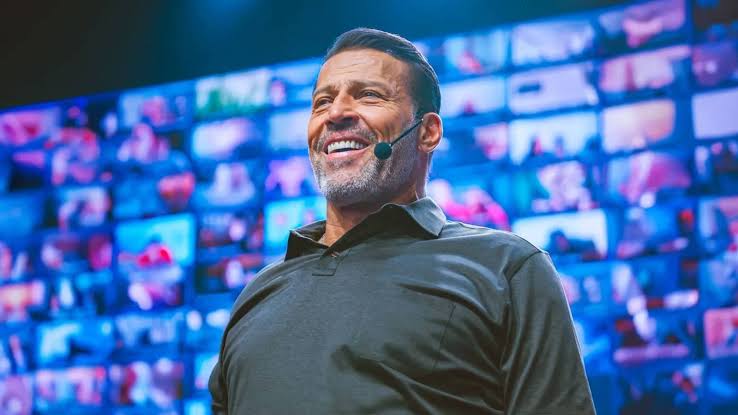
Fame does not replace optimization
One thing founders often misunderstand is that celebrity creates attention, but attention alone does not create conversions.
Tony Robbins doesn’t need LinkedIn to introduce himself.
His reputation already does that.
Most founders are in a very different position.
Their LinkedIn profile is often the very first interaction someone has with their business.
That means every detail matters.
Your headline.
Your banner.
Your featured section.
Your About page.
Your content.
Everything should guide visitors toward understanding who you are, what you do, and why they should trust you.
Even if you’re already well known, optimizing those elements makes every future opportunity easier.
Your LinkedIn profile should convert curiosity into trust
Think about how people arrive on your profile.
Maybe they watched one of your videos.
Maybe they heard you speak at a conference.
Maybe someone recommended you.
They’re curious.
Now your profile has one job.
Turn that curiosity into confidence.
Too many profiles assume visitors already know everything about them.
That’s a dangerous assumption.
Every profile should quickly answer three questions.
Who are you?
Who do you help?
Why should someone work with you?
If those answers are unclear, visitors leave with unanswered questions.
Followers are a vanity metric if they don’t support your goals
I often hear founders say they want one hundred thousand followers.
Whenever I hear that, I ask another question.
Why?
What would change?
Would those followers become clients?
Would they generate partnerships?
Would they increase revenue?
Follower count only becomes valuable when it supports a clear business objective.
I’ve worked with founders who generate significant revenue with relatively small audiences because they have built extraordinary trust.
I’ve also seen enormous accounts that struggle to monetize because they focus on popularity instead of positioning.
The goal is never to become famous.
The goal is to become trusted.
Every founder should think like a profile auditor
Whenever I review a LinkedIn profile, I stop thinking like the profile owner.
Instead, I become a first time visitor.
I ask myself simple questions.
Would I understand what this person does within a few seconds?
Would I know who they help?
Would I feel confident reaching out?
That exercise reveals opportunities almost immediately.
It is one of the easiest ways to improve your own profile because it forces you to remove assumptions and communicate with much greater clarity.
Your profile should evolve with your business
One thing I admire about Tony Robbins is that he continues evolving.
His businesses expand.
His content evolves.
His audience grows.
The same should happen with your LinkedIn profile.
Too many professionals update their profile once and never touch it again.
Your positioning changes.
Your offers improve.
Your experience grows.
Your profile should reflect those changes.
LinkedIn is not a static résumé.
It is a living representation of your professional reputation.
The stronger your business becomes, the stronger your profile should become as well.
The biggest lesson founders can learn
The biggest takeaway from analyzing Tony Robbins’ LinkedIn profile isn’t that it has weaknesses.
It’s that even one of the world’s most recognized personal brands still has room for improvement.
That should be encouraging.
Personal branding is never finished.
Every article you publish.
Every profile update.
Every new recommendation.
Every piece of content.
They all contribute to a stronger reputation over time.
The founders who continue improving their personal brand are usually the ones who continue attracting better opportunities.
Watch the Full Video on YouTube
If you’d like to see my complete analysis of Tony Robbins’ LinkedIn profile, I’ve created a dedicated YouTube video where I review his profile in detail, explain what I think works exceptionally well, highlight areas that could be optimized, and share practical lessons every founder can apply to their own LinkedIn presence.
Our YouTube channel is where I regularly analyze the LinkedIn profiles of well known entrepreneurs, CEOs, investors, and creators. These profile breakdowns are designed to help founders understand what builds authority, what creates trust, and how small profile improvements can lead to significant business opportunities.
Be sure to watch the full video and subscribe for future analyses.
If you’re ready to build a LinkedIn profile that attracts opportunities regardless of your follower count, I’d love to welcome you to the Private Founders Community.
Inside, we help founders and CEOs optimize every part of their personal brand, create authority through strategic content, and turn LinkedIn into a predictable business growth engine.